
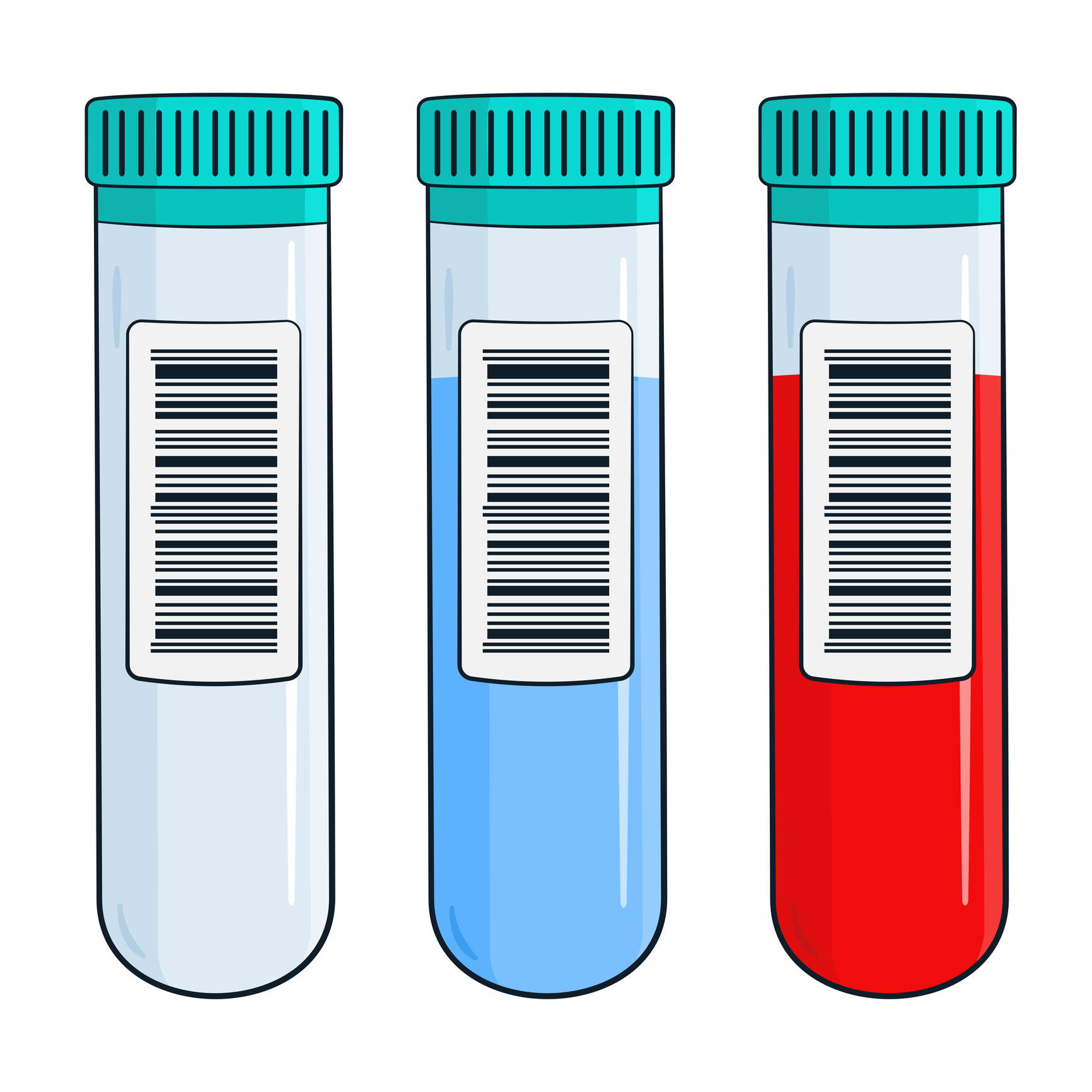
Venipuncture is the most essential technical skill for a Phlebotomist to hone. When performing a venipuncture, the Phlebotomist must gather many supplies, one of the most important being the collection tubes. These tubes are color-coded using a universal identification system based on additives. The Phlebotomist must understand and remember what each color represents, as it will affect the order of draw. Below, we will review the additives and their assigned tube color, the order of draw, how they are classified, and some tests that can be run on the blood collected in each tube. For more information about Phlebotomist relevant topics, visit PhlebCE.com for continue education opportunities on a wide variety of up-to-date and interesting healthcare topics.
Blood Cultures
If ordered, the first type of tube/bottle collected is a blood culture. Cultures can be in bottle or vacutainer (tube) form, though yellow-capped vacutainers are most commonly used. The additives include trisodium citrate, citric acid, and dextrose and are used for DNA studies or mycobacteria, fungus, or AFB blood cultures.1,2 The bottle forms of culture containers may have a variety of colored caps depending on the lab order being used and the purpose of the culture. Blood cultures must be inverted 8-10 times immediately after being drawn.3
Light Blue Top Tube
If ordered, the second type of tube is light blue; these tubes are sometimes called citrate tubes as they contain an additive that is a reversible anticoagulant with 3.2% sodium citrate.4 These tubes are used for hematology tests where whole blood must be analyzed.5 Typical tests done on blood from a light blue tube top are D-dimer, INR, and Prothrombin time. Light blue topped tubes must be inverted so the anticoagulant mixes with the blood.
Serum Separator Tubes
If ordered, the third tube drawn is a gold or tiger-topped tube, which is a serum separator tube. These tubes are known as SST tubes and contain two additives: silica particles and a serum-separating gel.5 The silica particles help activate clotting, and the gel, once the tube is spun in a centrifuge, separates the plasma and blood cells. Spinning these tubes makes it very easy to take out the serum when it needs to be tested separately from the remaining blood components. Some typical tests done through SST tubes are CRP, iron studies, lipid profile, beta-hCG, PSA, and rheumatoid factors.5 Serum separator tubes need to be inverted five times.3
Serum Tube
If ordered, the fourth tube that would be drawn is the red-topped tube, though they are not as commonly used. The additive in the red top is like a serum separator as it has silica particles but no gel separator. The red-topped tube can be used for certain hormone studies or drug levels.4 Red-topped serum tubes need to be inverted five times if the tube is plastic; if the tube is glass, there is no need to invert.3
Mint green
If ordered, the fifth tube that should be drawn is the mint green tube, commonly known as a plasma separator or anticoagulant tube. The additives in the tube are lithium heparin, an anticoagulant, and plasma separator gel.5 While uncommon, a mint green tube may be used for routine biochemistry tests or to test blood ethanol. These tubes are commonly used for “STAT” blood chemistry orders.4 Mint green tubes need to be inverted 8-10 times.3
Dark green
If ordered, the sixth tube drawn is the dark green tube. The additive in the dark green tube is sodium heparin, which is an anticoagulant.5 These tubes are commonly used for insulin or ammonia testing. Dark green tubes need to be inverted 8-10 times.3
Lavender
If ordered, the seventh tube drawn is the lavender tube, also known as an EDTA tube. The additive in the lavender tube is ethylenediaminetetraacetic acid (EDTA), which acts as an anticoagulant.5 Some tests commonly done with the lavender tube are the full blood count, Hemoglobin A1c, or an ESR.4 Lavender tubes need to be inverted 8-10 times.3
Pearl/Tan
If ordered, the eighth tube drawn is the pearl/tan top tube. The pearl/tan tube additive is ethylenediaminetetraacetic acid (EDTA) and polyester materials.6 These tubes are specifically used to collect plasma specimens for polymerase chain reaction (PCR) tests.6 Pearl/tan tubes need to be inverted 8-10 times.3
Grey
If ordered, the ninth tube drawn is the grey top tube. The additives in the grey tube are potassium oxalate as an anticoagulant and sodium fluoride as an antiglycolytic agent.5,6 These tubes are used for Glucose testing and lactate.5 The Grey tubes need to be inverted 8-10 times.3
References
- Michigan Medicine (2019, September 15). PRC Order Draw Multiple. University of Michigan. Retrieved January 15, 2024, from https://mlabs.umich.edu/sites/default/files/2020-01/file/prc_-_order_draw_multiple.pdf
- UNC Health (2023, September 21). Evacuated Blood Collection Tube Guide. Retrieved January 15, 2024, from https://www.uncmedicalcenter.org/mclendon-clinical-laboratories/test-specifications/tube-guide/
- A Synlab pathology partnership (n.d.). Blood Culture. Pathology First. Retrieved January 12, 2024, from https://qpulse.ipp-uk.com/QPulseDocumentService/Documents.svc/documents/active/attachment?number=PF-PTD-55
- Mindful Nurse (2016, December 1). Order of Draw. The Nurse Path. Retrieved January 12, 2024, from https://thenursepathblog.wordpress.com/2016/12/01/order-of-draw/
- National Library of Medicine (2023, August 8). Laboratory Tube Collection. NIH. Retrieved January 12, 2024, from https://www.ncbi.nlm.nih.gov/books/NBK555991/
- Geeky Medics (2023, December 6). Blood Bottles Guide. Retrieved January 12, 2024, from https://geekymedics.com/blood-bottles-guide/#Blue_blood_bottle
- UC Irvine Health (n.d.). Specimen Requirements/Containers. Department of Pathology & Laboratory Medicine. Retrieved January 12, 2024, from https://www.pathology.uci.edu/services/specimen-containers.asp
